


I’m obsessed with the idea of women going on strike.
To be more specific, a midlife strike—where women between 45 and 65 just… stop.
Why?
Because society has a messed-up way of devaluing us. We’re expected to provide domestic labor without getting paid. Then, the minute we can’t pop out babies, they also deem us invisible. BUT being invisible doesn’t relieve us of the labor; we’re expected to keep providing that in perpetuity.
It’s pretty audacious to be made invisible while being the ones who keep everything running smoothly.
I don’t want to fight for a seat at a table where no one sees or hears us. But I do love the idea of remembering how powerful we are by withdrawing our presence: the quiet strike. This is what mythic Goddesses do, by the way. They withdraw their favor and wait for the world to notice the chill.
If you’re asking what a quiet strike might look like, we have examples in art and history to draw from.
There’s Lysistrata, the classic Greek comedy where women withhold sex from their husbands until they find a peaceful resolution to the war.
I borrowed that premise and plopped it into a modern-day scenario for a short film I shot a few years back called Lysistrata 2.0. It was fun to use sex and humor to look at the potential impact the feminine mystique could have on our democracy.
NSFW Warning: Mature themes. Stay tuned for voter registration details at the end of the film.
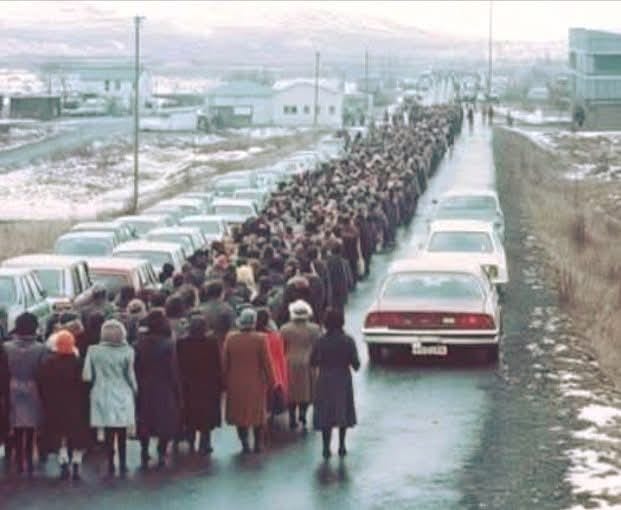
In real life, we can turn back to October 24, 1975, when the women of Iceland staged the ultimate “Quiet Strike.” Although for legal reasons they called it “Women’s Day Off” (Kvennafrí).
Imagine 90% of the women in the country just walking out. 25,000 women—more than 10% of the entire country’s population—stood together in the square in Reykjavík.
Nurseries and schools closed. Men had to take their kids to work. Telephone service was crippled. Flights got canceled.
In my book Joybellion, I call this playing two games.
The first game is the one the status quo forces us to play—where we’re told we’re insignificant once we’ve fallen outside their narrow definitions of value. We play this game out of necessity but we also play to understand their rules so we can bend them, break them, and ultimately rewrite them in a second game.
The second game is what I call the Game of (In)significance. In this game, we make the rules. We stop looking for validation from a system that doesn’t see us and, instead, we turn that energy inward. We prioritize self-trust and our own ease and let the old system figure it out without us. It’s a goddess move.
The Icelandic women played a second game. They didn’t have to shout; they just stopped. And within five years, Iceland had the world’s first democratically elected female president.
Back to the present moment: perhaps a national strike is a big ask, but we could quiet strike in our own small corners of the world. Wouldn’t it be great, instead of being invisible, to consciously choose to disappear?
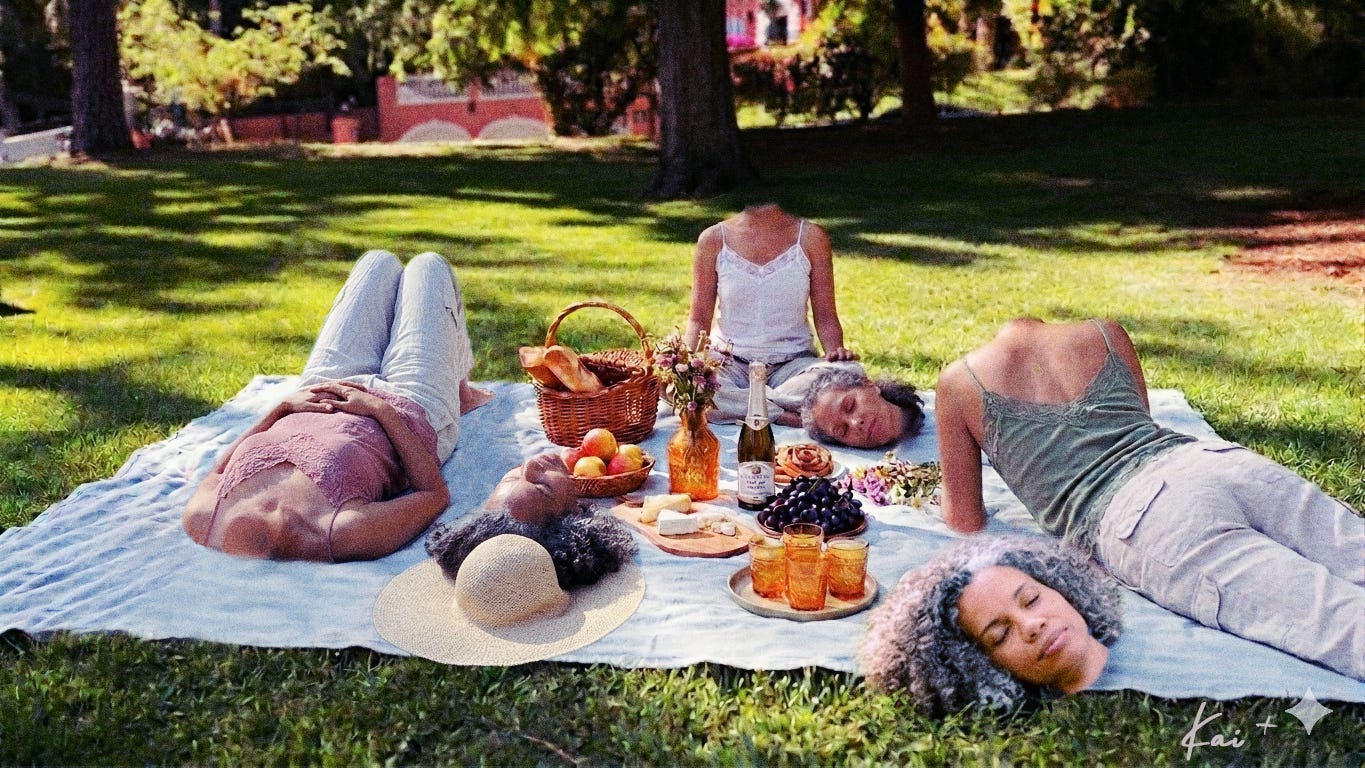
We could gather in parks on picnic blankets, munching on goodies, talking about frivolous things. A simple sign in the grass states our resistance: a hand held up in a firm “stop” with the words “Do Not Disturb.” We could take naps on our blankets because we feel safe surrounded by our own.
I’ve seen this kind of shift work in real life. My mom was a traditional housewife, but somewhere in her 50s or 60s, she decided she was done driving. In a suburb where you had to drive to get a gallon of milk, this was a massive shift.
If you’d told me my dad—”the breadwinner”—would take over the food gathering duties, I wouldn’t have believed you. But my mom shifted her behavior, and the world around her had to adjust.
If you’ve hung with me for any length of time, you know I believe ease is a midlife woman’s earned right.
The cultural messaging bombards us with the idea that our contributions are valueless. But when we stop, the world wobbles. It’s a classic gaslight: being told we don’t matter as we hold the roof up. The logic is illogical.
Taking a “Day Off” is about reclaiming the freedom and power everyone, including ourselves, seems to have forgotten we have. It’s about putting us back in the seat of our agency.
Plus, as a bonus, we get to rest.
If stopping is hard for you (like it is for me), try starting with C+ labor. That’s slightly above average, and in a world that expects A++ from us, C+ is an act of joybellion.
But, if we want to change the world, if we want liberation, the most potent way to do it is to change ourselves. We don’t change ourselves because there’s something wrong with us. We change to shift our behavior in the direction of the world we want to live in.
My invitation to us? Make insisting on ease our most radical act.
I’ll bring the picnic blanket. See you in the grass.
If you were going to quietly strike, what is the first thing you would stop doing? It doesn’t have to be reasonable by the way. :)
Have you checked out The Joyride? It’s a free private podcast series for women in midlife who are done living by everyone else’s rules and ready to make their own.
Thank you for being a part of the magic and mischief here—I’m grateful for your presence. If you want to keep the Joybellion thriving, here’s how you can support:
‘Heart’ this post to spread the good vibes and boost its reach.
Drop a comment—I love hearing from you and do my best to respond.
Share this post by email or on social media, including Substack’s ‘Notes.’
Upgrade to a paid subscription to fuel the movement and keep it free for everyone.
Leave a one-time tip by buying me a matcha latte 🍵.
To the Joybellion. 🤸🏽♀️ ✊🏽
If I were to go on a quiet strike, I’d just stop making dinner. There’s plenty of food in the house, and everyone in the family is old enough and able enough to make something for themselves to eat, even if it’s just a sandwich or a bowl of cereal.
Hmmm… now that I’ve typed that all out, I kind of want to try it! I’d start with one night, just to see what happens. 😎